
The Ultimate Guide to the Bathroom Measurements You Need
Today we’re in the midst of bathroom renovations and I figured it was a good time to talk about all the bathroom measurements that go into planning a project!
I’m sharing a handy reference guide with all the need to know bathroom measurements so you can find them all in one place.
Whether you’re renovating now, planning a renovation, or even just imagining it (because that’s where it all starts anyway!) here are all your important numbers to keep in mind!
Bathroom Measurements Guide
If you haven’t renovated a bathroom you’ve probably never had to consider how many inches you need between a wall and a toilet, or even a door and a toilet.
I bet if you’ve ever been in a cramped bathroom you’ve noticed those inches though!
Inches are the most important in smaller spaces and we all need all of our spaces to work efficiently.
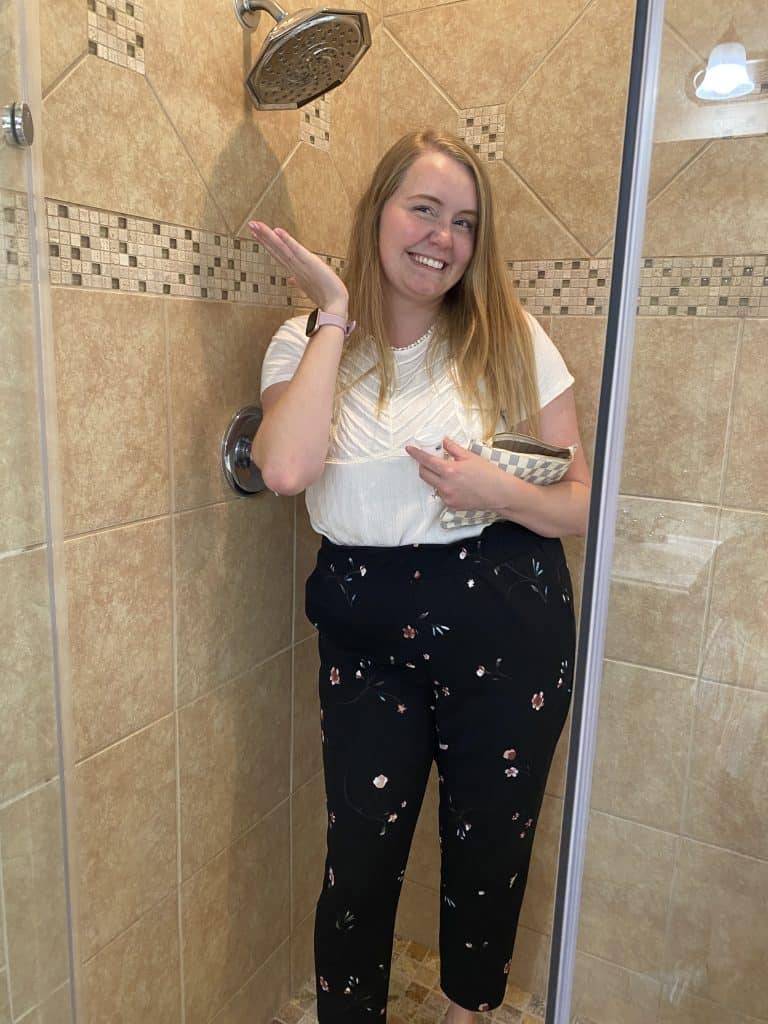
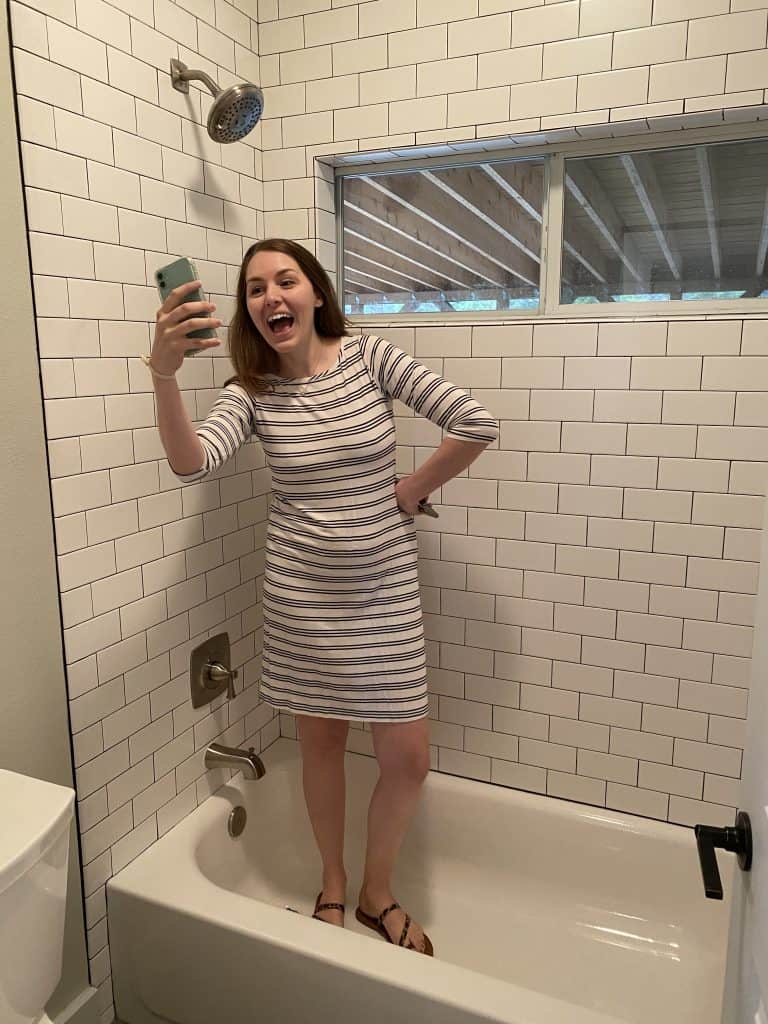
I have a son-in-law who is 6’6″ and we’ve got so many photos standing under shower heads in different homes while they were house hunting. The height is a big deal when you’re tall! Let me tell you, there are some really low shower heads in some houses. These photo’s do make for a funny compilation though!

Bathroom Measurement Recommendations
All the measurements I’m sharing with you are based on guidelines from the building and design industry, but in your home you definitely get to decide what’s best. If your family is on the shorter side then you should make everything a bit lower and if your family is taller then you can certainly add inches to all these guidelines.
Your space is meant to function for your family – so always take that into account when you’re working on a project.
It’s worth noting that if you’ve got a balanced bathroom, you probably won’t notice the height or proportion of things because they feel right. If it feels effortless then it’s probably because someone put a lot of effort into making it that way.
If you follow this guide you’ll find that towels will be easy to reach, drawers will have plenty of room to open and you’ll have light in all the right places.
Bathroom Vanity Height
The standard height for bathroom vanities used to be around 32″; however, the new popular height is called comfort height and is 36″.
This is the standard height for kitchen counters and it’s been adopted into bathrooms to reduce the amount you have to bend over when using the sink. If you have children or are smaller in stature, you might want to continue using the lower standard height.
I’d say it’s pretty common for a house with multiple bathrooms to have one that’s lower for the kids to use.
Makeup Vanity
A makeup vanity needs a lot of considerations beyond just the height (mirrors and lighting) but we’re going to stick to just measurements here.
The height of a bathroom vanity is really dependent on the height of the chair or bench that you’re planning to use. An adjustable office chair works great here and you can find some really cute ones at discount stores.
The standard height is going to be between 26″-29″. If your regular vanity is at 32″ I’d go with the 26″ height for makeup. If you’re using comfort height cabinets then I’d go with the 29″ height for makeup.
Bathroom Vanity Sconces
There’s a wide range here but you definitely want to consider your height. Vanity sconces range from 60″-72″ from the floor.
Remember that there are so many different kinds of sconces available, some have uplights, some face down and the height of your vanity is a factor as well. The rule of thumb is that the center of the sconce should be about eye level for you and they should be around 26″- 40″ apart to get the best lighting.
You also don’t want to be looking up into a bulb so be sure to hold up your sconces and adjust them before installing them.
Shower Head
A shower head should be installed at 77″-81″ from your finished floor height. If you’re mid construction be sure to take into account your tile when you’re measuring so that you get an accurate height.
If you’re dealing with lots of different height people using the same shower you’ll probably want to consider a handheld shower wand to make it more convenient. I especially like these because they make cleaning a lot easier as well.
There are lots of options to have a shower head along with a shower wand and they make a more family friendly shower for sure.
Shower Controls
Shower controls, including valves and handles, are typically installed at a height of 38 to 48 inches above the shower floor to ensure easy accessibility and usability for most people. You don’t want to have to bend over to adjust the temperature of your shower while you’re in it.
Shower Bench
The height of a shower bench should be 17″-19″ with a depth of 12″-16″. Think about sitting in a chair – you’re not sitting on a shower bench to relax but it needs to be wide enough and deep enough to actually be useful. If not, you’ve built yourself a shelf!
These measurement are typically comfortable for many people. A shower bench should generally be located on the wall opposite of the shower controls.
Shower Niche
There are no hard and fast rules about a shower niche so you definitely want to measure your most common products to see how tall they are before planning your niche. The standard should be about 48″-60″ above the floor but you should aim to keep the top of the niche below eye level.
Toilet Height
Common toilet height is 17″-19″ for ADA compliance and comfort. There are toilets that measure 14″-15″ tall so you want to be sure to check which one you’re purchasing if you’re planning to replace your toilet.
Toilet Paper Holder
The standard height for a wall-mounted toilet paper holder is 26″ from the finished floor. We’ve all been in a poorly designed bathroom where the toilet paper is just out of reach so be sure to place it 8′-12″ away from the front (center) of the toilet bowl.
Towel Bars
The standard height for a towel bar is 48″ but it can go as low as 40″ if you’re planning a bathroom primarily for children.
The idea is that you want to be able to grab your towel without reaching up or reaching down, but rather straight out. Additionally, this height keeps a folded towel from getting too near the floor.
I generally prefer hooks in my bathroom so that we can have them at different heights that are comfortable for adults and kids.
Towel Ring Height
Hang towel rings at the same height (measure from the bottom of the ring) as towel bars if they’re over the floor. If it’s over the vanity, hang the towel ring so the bottom of your towels hang at least a few inches above the vanity which is typically 18-22″ above the vanity (measuring from the bottom of the ring).
Robe Hook Height
Along with being used for robes, robe hooks are a great alternative to towel bars! The recommended robe hook height in your bathroom is between 55-70″ above the floor. Mine are placed at 67″ high which keeps our robes and towels off the floor.
Chandelier Height
A chandelier in the bathroom is what all the Pinterest and Instagram dreams are made of right?
There are some cities that have codes that may not allow for chandeliers to be placed over bathtubs, or be more restrictive than the general guidelines.
Yep, I see the pictures online and I recognize that it’s probably the most ignored building code on the books, so just be sure you know the rules.
And recognize that the rules are for your safety!
There are zones around your tub and shower if you’re planning to place a chandelier. At minimum, the bottom of the chandelier can’t be closer than 8′ above the top of the tub – so you’ll need a pretty tall ceiling for this. The light will also need to be damp rated but you should always consult with local electrical authorities as they may have more stringent variations of the NEC.
If you’ve got 8′ ceilings, you’ll want a chandelier that is no taller than 12″. You need 7′ of clearance from the ground for people to walk under it, and also probably for your teenage daughters to flip their wet hair up and down.
A chandelier should be proportionate to your room so remember to check those dimension for your sizing guide. (width + length of you room and then convert to inches).

Important Bathroom Measurements
Remember – These bathroom measurement recommendations are based on guidelines from the building and design industry. Use them as a starting point and adapt them to your own preferences to create a kitchen or bathroom that feels right for you.
Be sure to comply with any local building codes for safety, and remember that the codes are there for your safety!
Is there a measurement that I didn’t include or one that you don’t agree with? Be sure to let me know in the comments so I can add it to this guide or double check my information!
Enjoy your bathroom renovation or new build!
Be sure to follow me on Instagram, TikTok and Pinterest for more inspiration!
You also might be interested in :


heard about this on chicha radio, decided to give it a try.