Scared of Color? 6 Places to Use a Bold Paint Color Without Regretting It
Have you ever fallen in love with a paint color, brought home a sample and then talked yourself out of using it? What if it’s too dark? Too bright? Too much?
I get it. Paint feels like a small decision until you’re staring at an entire wall wondering what on earth you were thinking. I know I’m not alone in second-guessing myself halfway through painting a wall!
I’m currently working on a chartreuse wall behind our TV cabinet in the living room, and I have to admit that it’s a bit shocking while we’re in the process stage of it. I’m committed, though!
Remember: You don’t have to paint your entire living room emerald green to bring more color into your home. Sometimes, the best way to get comfortable with bold color is to start small.
These spots are perfect for adding personality without making a commitment you’re not ready for.
1. The Powder Room
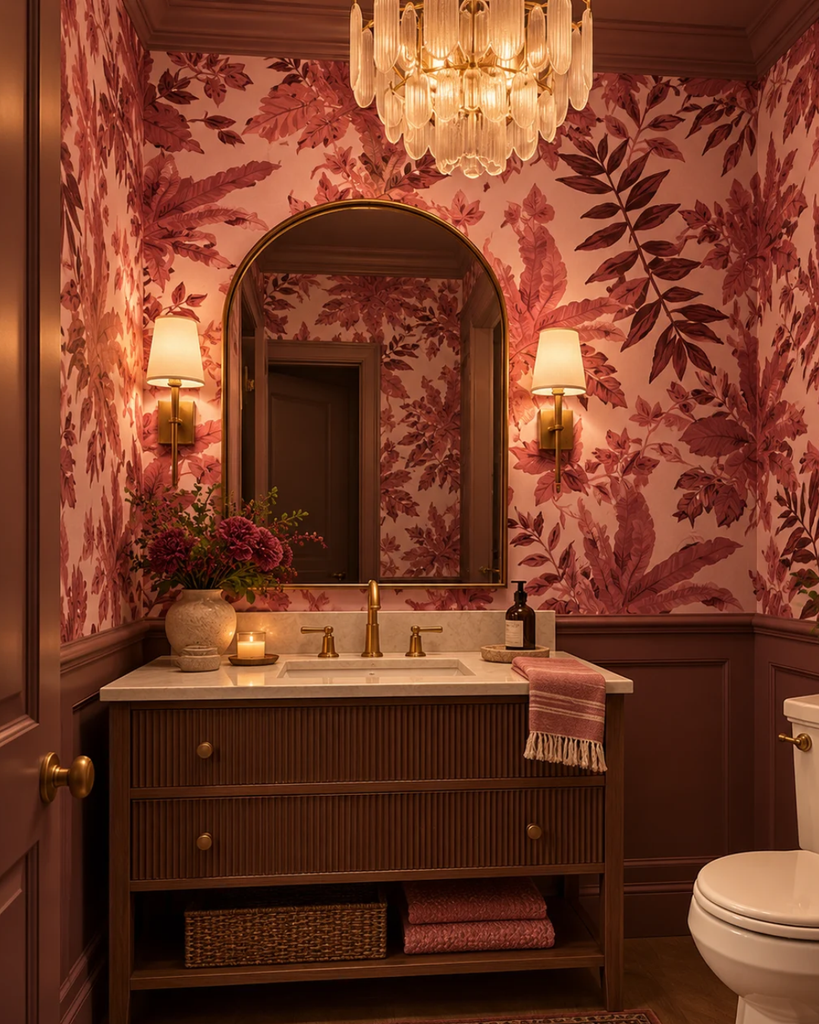
If there’s one place where I’d encourage you to throw caution to the wind, it’s the powder room.
Because it’s a small, separate space, you can experiment with saturated colors that might feel overwhelming in a larger room. Think deep blue, forest green, raspberry or even a rich red.
Bring in an interesting mirror, statement lighting and a few funky accessories, and suddenly that little bathroom becomes one of the most memorable spaces in your home.
Design tip: Don’t assume a small room needs a light color to feel bigger. Sometimes, embracing the coziness makes the room feel even more special.
2. The Back of a Bookcase
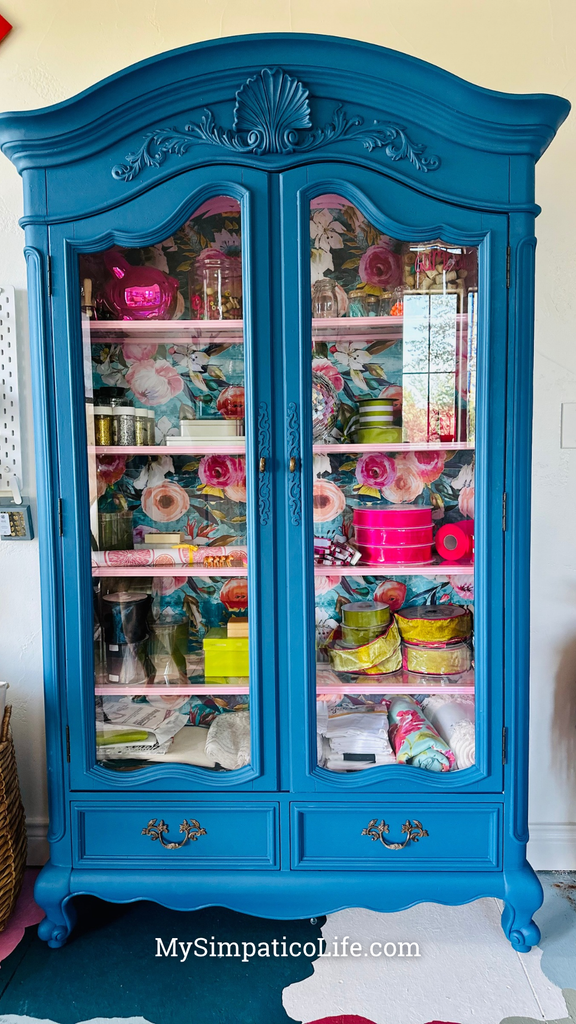
Not ready to commit to an entire wall? Paint the back of a bookcase or built-in shelving.
A deep, contrasting color creates a beautiful backdrop for books, artwork, collected treasures and family photographs. It adds depth without competing with everything else in the room. It’s like a tiny secret in a room.
Try inky blue, olive green, deep teal or hot pink (my personal favorite).
I especially love to use wallpaper in the back of a bookcase and I’ve done it to a couple of them in my own home!
Design tip: This works especially well when you already have neutral walls and want to introduce color without changing the entire room.
3. An Interior Door
A painted interior door is a small change that can make a surprisingly big impact.
Imagine a raspberry door against warm white walls, a deep blue door in a neutral hallway or a rich green door that complements the view into an adjoining room.
It’s an easy way to introduce a little unexpected personality without repainting everything around it.
Design tip: Consider painting the door trim, too, if you want a more finished look. And remember that the color should relate to something else nearby. We’ll get to that in a minute!
4. The Ceiling
We spend a lot of time thinking about walls, but what about the fifth wall?
A painted ceiling can add character and bring a nice change into a room. Soft blue can feel airy, muted green can feel calming and a deeper shade can create a cozy, enveloping atmosphere.
This is also a great place to add personality with a bright color or a pattern.
You can paint the ceiling a color that complements your walls or use a deeper version of your existing wall color for a more subtle effect.
Design tip: Look at the room’s natural light, ceiling height and existing finishes before choosing your shade. And yes, white ceilings are perfectly fine. They just aren’t your only option.
5. A Small Hallway
Hallways often become an afterthought. They’re simply the space you walk through to get somewhere else.
Let’s change that.
A small hallway can be a great place to experiment with a deeper or more saturated color. Try a rich green, warm ochre or dusty blue, then layer in artwork, interesting lighting and a runner if the space allows.
Instead of feeling like a forgotten passageway, the hallway becomes a fun transition between rooms.
Design tip: Pay attention to the colors in the rooms on either side. Your hallway doesn’t have to match them, but the colors should work together.
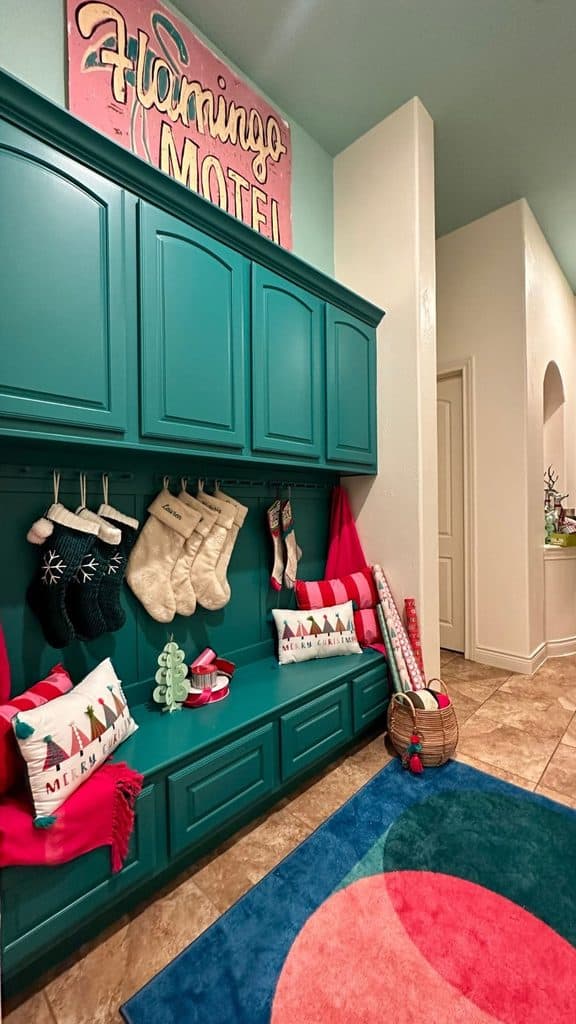
6. The Laundry Room
Who says every room in your home has to be decorated for company?
If you have a dedicated laundry room, it’s a perfect place to have a little fun. A cheerful blue, lively green or warm coral can make a hardworking space feel more personal.
You can introduce color through the walls, cabinets or even a painted door. Add a wood countertop and some attractive storage baskets or bins. Now this room starts to feel much brighter. And we definitely need some fun added to a space that’s mainly utilitarian.
Design tip: If you’re hesitant to use bold color in your main living areas, start here. You get to experiment in a room you use regularly without having to make it the focal point of your entire home.
The Secret to Making Bold Color Work: Repeat It
Here’s where most people struggle with bold color: they use it once and wonder why it feels out of place.
You might paint a beautiful deep blue door, a bookcase or a powder room vanity, only to step back and feel like something isn’t quite right. The color itself may be gorgeous. It just doesn’t feel connected to anything else in the space.
The fix: repeat that bold color at least two more times in the room.
If you’ve painted a door raspberry, pick up that same color in a throw pillow and a piece of artwork. Have navy cabinetry? Bring navy into a rug, a patterned fabric or some candlesticks and books.
These don’t have to be exact matches in every instance, but the color should be recognizable.
Why does this work? Repetition gives the eye a path to follow around the room. Instead of seeing one random splash of color, you begin to see a thoughtful, connected design.
It’s one of the simplest ways to make a room feel intentional, and you don’t need to hire a designer or buy an entirely new set of accessories to do it.
Think of it this way: One bold color can feel accidental. Three appearances can feel intentional.
So go ahead and choose that color you’ve been eyeing. Just give it a couple of friends to keep it company.
Before You Pick Up the Paintbrush
A few simple steps can help you feel more confident about your choice:
- How do you want the room to feel? Remember the mood you choose will help you determine the decor and paint colors.
- Start with the space that excites you. You don’t have to follow a decorating rule that says every room must be neutral.
- Consider your existing finishes. Flooring, countertops, rugs and furniture all influence how a paint color looks.
- Find a focus. A rug, a throw pillow or art are great inspiration pieces.
- Test your paint first. Use a sample board and look at it in different lighting throughout the day.
- Remember that paint is changeable. Some projects require more work than others, but you’re allowed to try something new.
And if you choose a color and decide it isn’t for you? That’s okay, too.
Renting?
If you are a rentor, that doesn’t necessarily mean you can’t use a bold color. In my daughter’s apartment, we got permission to use color and they gave us the color codes to repaint when she moves out.
Yes, it’s twice the work to paint now and later, but it’s worth it for how her space looks and feels.
There are great peel-and-stick options in wallpaper, and you can thrift bookshelves and furniture to add a signature color too.
Ready to Be a Little Braver With Color?
A beautiful home doesn’t have to be beige, and you don’t need to be fearless to use color well. You just need a starting point, a little planning and a willingness to try something you love.
Choose one spot. Find a color that makes you happy. Then repeat it a couple of times so it feels right at home.
Remember, you can always add a little color!
Where are you planning to start?
Follow along on Instagram, TikTok and Pinterest for more colorful ideas.
More ideas you’ll love
- Your Inspiration Piece Is the Fundamental First Step in the Design Process (the “start with what you love” idea, for the whole house)
- Avoid These 5 Common Decor Mistakes
- More color ideas
- Traci’s Picks